
Summary:
Here’s how it usually goes: you’ve got a move coming up, everything’s planned, and then someone asks about the gun safe in the basement. You call your movers. There’s a pause. They either say they don’t do it, quote you something that feels made up, or agree — and then show up without the right equipment.
It’s one of the most common moving-day surprises we see across Nassau County, and it’s almost always avoidable. This guide covers what it actually costs to move a safe on Long Island, what the process looks like when it’s done right, and what to ask before you book anyone.
Gun Safe Movers: What the Job Actually Costs in Nassau County

The national average for moving a gun safe runs between $295 and $357, but that number doesn’t mean much if you’re in a 1950s Cape Cod in Massapequa with a 700-pound safe in the basement and a narrow staircase between it and the front door. Local conditions matter — and Nassau County has a few that consistently push costs higher than the national baseline.
Most professional gun safe moves in the area fall between $150 and $600 for a straightforward local job. Complex moves — multi-floor homes, tight staircases, or long carry distances — can exceed $800. The variables that drive the price are predictable once you know what to look for.
What Factors Affect the Cost of Moving a Gun Safe?
Weight is the first thing we ask about. Small gun safes start around 300 to 500 pounds. Mid-size residential safes typically run 600 to 1,000 pounds. Commercial-grade units can exceed 5,000 pounds. The heavier the safe, the more manpower and equipment required — and the more time the job takes.
Floor level is the second major factor. Moving a safe from a finished basement in a colonial in Garden City is a meaningfully different job than moving one from a ground-floor room in a ranch home in Levittown. Stairs add $150 to $300 per flight to the total cost, and that’s not padding — it reflects the additional crew, equipment, and time required to move a top-heavy, dense object through a stairwell safely.
Crew size matters too. A two-mover crew runs around $135 per hour, a three-mover crew around $180, and a four-mover crew around $225, with most jobs requiring a two-to-three-hour minimum plus travel time. For a heavy safe on a difficult route, the right call is more people, not fewer — trying to cut costs by under-crewing a 900-pound safe move is how floors get damaged and people get hurt.
Accessibility is the last big variable. Nassau County’s housing stock averages 73 years old. Homes built in the 1940s, 50s, and 60s were not designed with today’s appliance and safe sizes in mind. Doorways are narrower, hallways are tighter, and staircases are steeper than in newer construction. If your home has any of these features — and most Nassau County homes do — tell us before we arrive. A crew that asks the right questions upfront is a crew that shows up prepared.
Do I Need to Empty My Safe Before the Movers Arrive?
This is one of the most common questions we hear, and the answer depends on what’s inside. Firearms and ammunition should always be removed before a move. We won’t transport loaded firearms or live ammunition — it’s a safety and liability issue, full stop. If you’re moving guns, plan to transport them separately and in compliance with New York State law.
Other contents — documents, jewelry, cash, hard drives — can often stay inside the safe if they don’t add excessive weight. A safe that’s already pushing 800 pounds doesn’t need any help getting heavier, so use judgment. When in doubt, ask us during the quote process. We’ll tell you honestly what makes sense for your specific safe and situation.
The weight distribution of a gun safe is not uniform. The door alone can account for a significant portion of the total weight, and it’s positioned in a way that makes the safe top-heavy and awkward to control on a slope or staircase. This is why the equipment matters as much as the manpower. A heavy-duty appliance dolly rated for 1,000-plus pounds, ratchet straps, moving blankets, and floor protection materials are the baseline for any safe move done right. For stairs, a powered stair-climbing dolly is the difference between a controlled move and a dangerous one.
Floor protection is also worth mentioning here. The risk of damage during a safe move isn’t just while the safe is moving — it’s where it ends up. Floor load capacity is a real consideration, particularly for second-floor placements in older Nassau County homes. If you’re putting a 700-pound safe on a second floor, it’s worth having a conversation about whether your floor joists can handle the load before the crew arrives, not after.
Appliance Movers and Specialty Movers: Getting Everything Handled in One Trip
The safe is usually not the only heavy item that needs special handling. Most homeowners in the middle of a full move are also dealing with a refrigerator, a washer and dryer, maybe a piano, maybe a large antique piece. Coordinating two separate companies for a single move — one for the safe, one for everything else — is a logistical headache that most people don’t realize they can avoid.
We handle safes, appliances, pianos, organs, and other heavy or specialty items as part of a complete move. One team, one appointment, one invoice. For Nassau County homeowners managing a full household transition, that kind of consolidation makes a real difference.
What Do Appliance Movers Actually Handle?
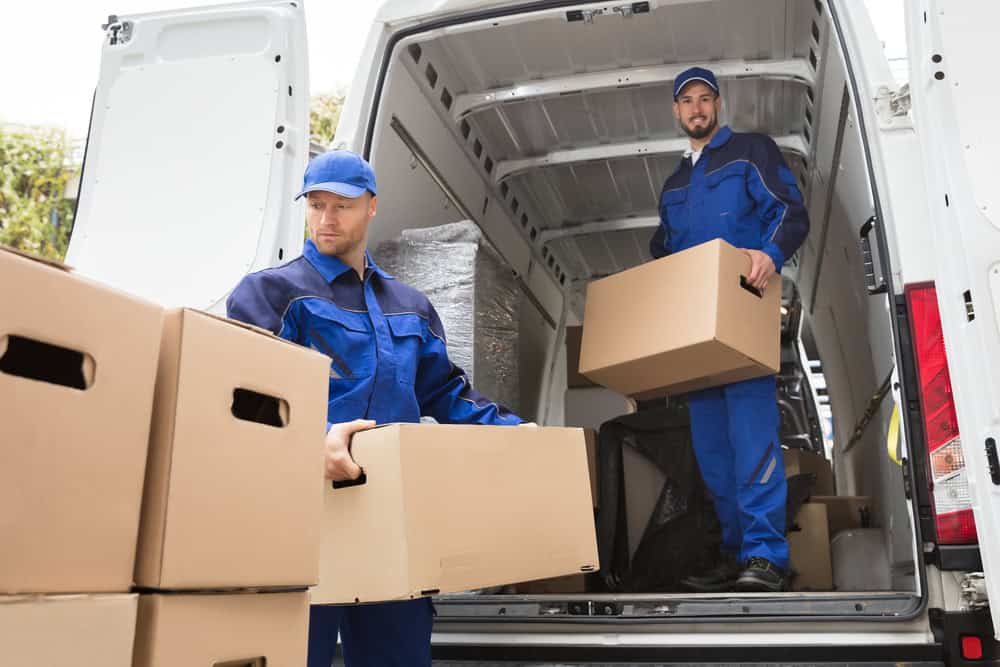
Refrigerators, washers, dryers, dishwashers, and large standalone freezers all require more than a standard dolly and a willing back. These are heavy, awkward, and in many Nassau County homes, they’re situated in spaces that weren’t designed for easy removal — galley kitchens, tight laundry closets, basement utility rooms with low ceilings.
The same principles that apply to safe moving apply here. You need the right dolly, the right number of people, and someone who’s thought through the path from point A to point B before they start moving anything. A refrigerator going through a 32-inch doorway in a Rockville Centre colonial is a different job than one going through a wide-open entryway in a newer Plainview home. Experience with the actual housing stock in Nassau County matters.
What we bring to every job — safe or appliance — is a truck fully stocked with protective blankets, shrink wrap, ratchet straps, and floor and wall protection. We protect the item being moved, and we protect the home it’s moving through. Doorframes, hardwood floors, and painted walls are all at risk when a 400-pound refrigerator is navigated through a tight hallway without proper padding. This isn’t an extra service — it’s just how the job should be done.
For homeowners moving out of a home in Hicksville or Westbury and into a new place across the county, having one crew handle the safe, the appliances, and the furniture means nothing gets left behind or scheduled for a separate day. It also means one point of contact if anything needs to be adjusted — not two companies pointing fingers at each other.
Specialty Movers: What Sets a Real Specialist Apart From a General Mover
Not every mover is a specialty mover, and the distinction matters more than most people realize until something goes wrong. A general moving company that handles its first 800-pound safe of the year does not have the same risk profile as a crew that regularly moves safes, pianos, and heavy appliances through the kinds of homes that make up most of Nassau County’s residential landscape.
The difference shows up in the equipment, the questions we ask before arriving, and the way we assess a job. We ask about floor level, staircase configuration, doorway widths, and safe weight before we quote you — not after we’ve already started. We know that a top-heavy safe on a steep staircase in a Syosset split-level requires a powered stair-climbing dolly, not improvisation. We protect the floors before we start moving, not after we notice a scratch.
It also shows up in accountability. Fully licensed and insured movers operating under New York State Department of Transportation authority carry cargo insurance and general liability coverage. If something does go wrong — a scratch on a hardwood floor, a nick on a doorframe — you’re protected. Many of the operators who surface on app-based platforms or through last-minute searches don’t carry the same coverage. In a county where the median home value runs close to $800,000 and a quality gun safe can represent a $1,000 to $5,000 investment, that distinction is worth caring about.
We’ve been doing this work on Long Island since the 1980s. The homes in Nassau County — the colonials in Garden City, the ranches in Valley Stream, the split-levels in Plainview — are not unfamiliar territory. Neither are the access challenges that come with them. That kind of accumulated, local experience is not something a national app or a company that launched last year can replicate.
How to Find the Right Safe Movers in Nassau County
When you’re looking for safe movers on Long Island, the right questions to ask are simple: Do they have experience with your specific safe’s weight category? Do they carry the proper equipment for stairs and tight spaces? Are they fully licensed and insured under New York State law? Will they give you a flat-rate quote with all fees included before the job starts, not a number that grows once they’re on-site?
If the answer to any of those is unclear, keep looking. A safe move done wrong is expensive — in floor repairs, property damage, or worse.
If you’re in Nassau County and need a crew that handles safes, appliances, pianos, and full household moves under one roof, Dunbar Moving has been doing exactly that across Long Island for over 30 years. Reach out to get a straightforward quote and find out what the job will actually take.